
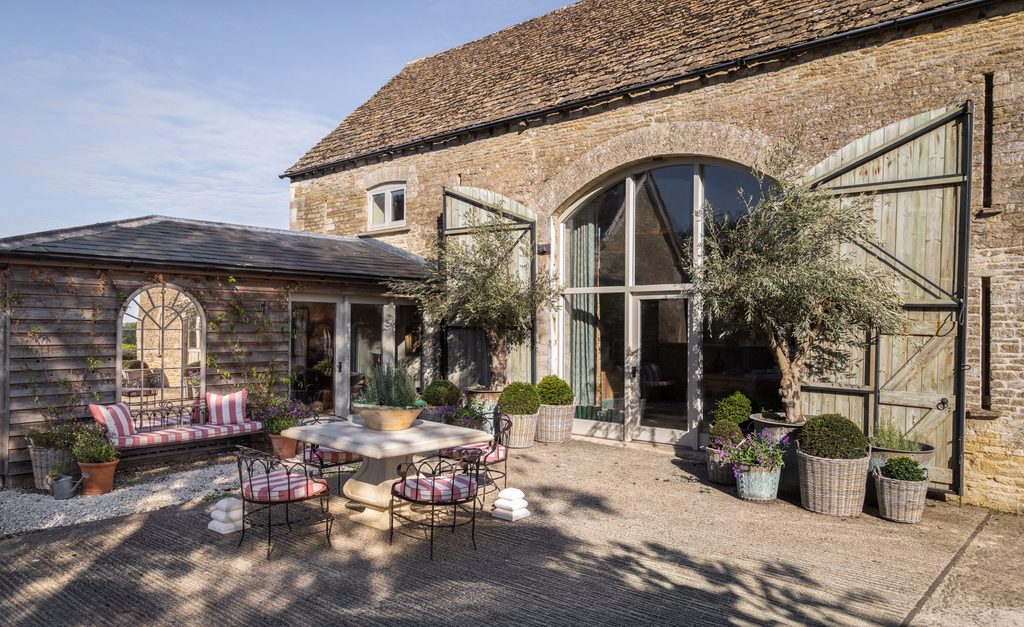
Moving into our new studio in a converted barn in the heart of Tetbury has given us the opportunity to rethink what we need from a workspace. After working in a darker office, the natural light and generous proportions have been a real luxury. We wanted somewhere that felt like an extension of our design approach: layered, characterful and practical, with room for the team to work, spread out and let ideas take shape.
If there’s one thing we’ve learnt, it’s that a good studio needs to work just as hard as it looks good. Here are a few things we’d recommend considering when designing a studio or tips you can translate into designing an open space.
01. Room to spread out
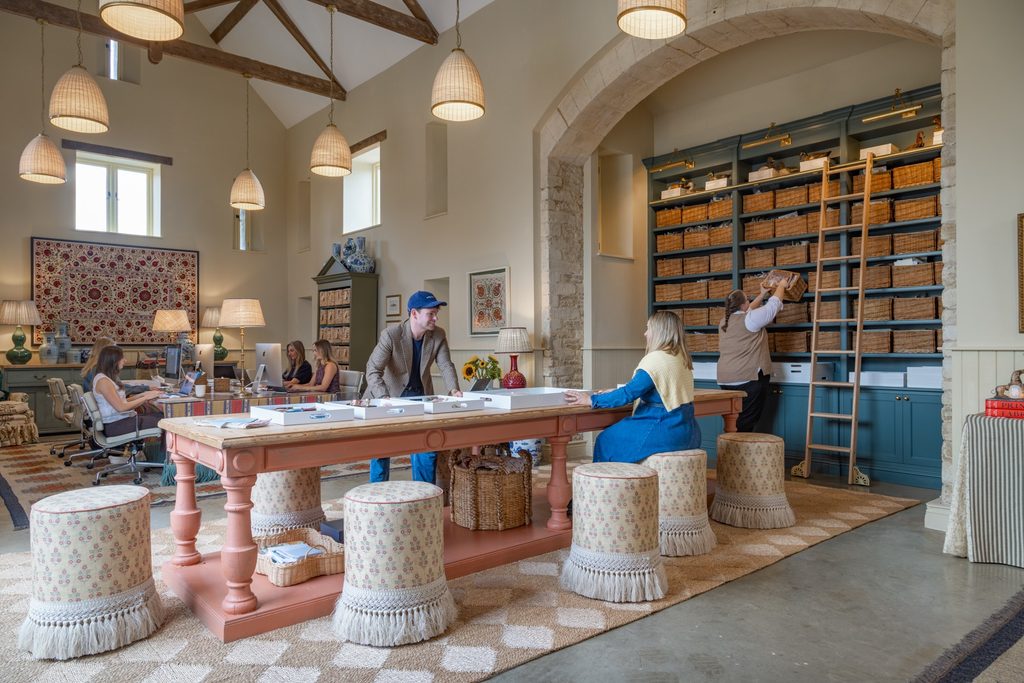
Interior design involves a surprising amount of physical work, from laying out fabric samples and material palettes to reviewing drawings and pulling together schemes. Having enough space to spread out makes all the difference. We have a large antique drapers table at the heart of our studio, which gives us somewhere to bring everything together and look at a scheme as a whole. Storage underneath keeps samples close to hand without taking over the room.
At home: The same principle applies to open-plan living. Think about how you actually use the space, whether that’s entertaining, working from home or having somewhere for the family to gather. A generous dining table, an oversized coffee table or a central kitchen island can provide a natural focal point while giving you room to live comfortably around it.
02. Find the balance between open and private spaces
An open-plan studio is brilliant for collaboration, but it’s worth thinking about where you might need a little privacy, too. A combination of shared working areas and quieter spaces gives the team flexibility throughout the day. We also wanted a small, self-contained kitchen; it doesn’t need to be enormous, just well considered and easy to use. And if you’re working with lots of samples, materials and project files, dedicated storage space is invaluable.
At home: Open-plan living doesn’t mean everything needs to happen in one uninterrupted space. Consider how furniture placement, rugs, lighting or a change in flooring can distinguish the kitchen, dining and sitting areas without closing them off. Even within a large room, a reading corner or a smaller seating arrangement can create a welcome sense of retreat.
03. Make organisation part of the design
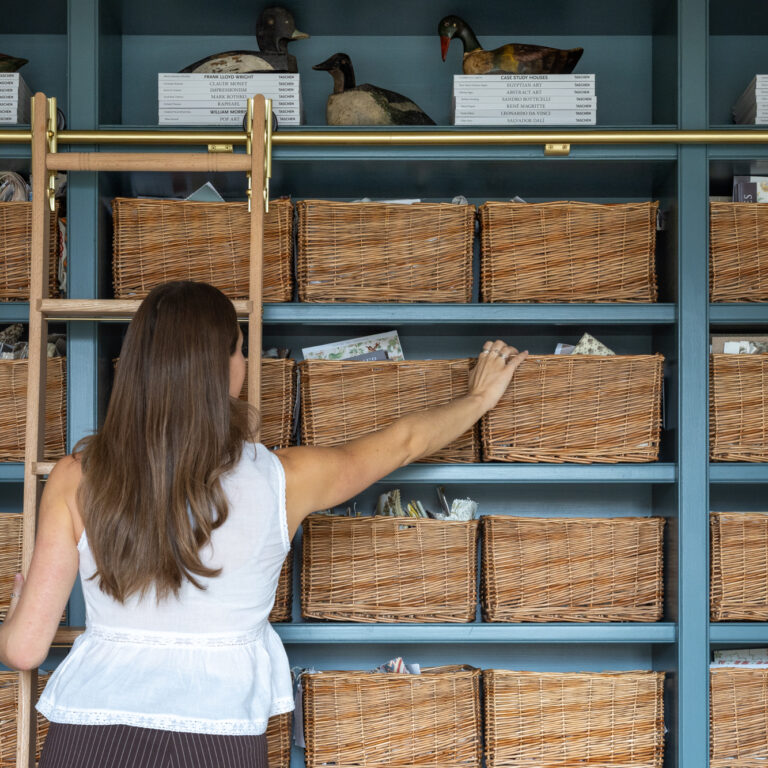
In a busy design studio, organisation is everything! We like having samples accessible without letting them dictate the look of the room, so baskets and clearly designated storage help keep everything in order. We separate client-specific baskets from general sample collections, making it easier to pull together the right materials for each project. We’ve also used simple, practical furniture where it makes sense, including desks made with IKEA legs, which we’ve softened with fabric skirts. It’s a straightforward way to introduce texture while keeping everyday essentials tucked out of sight.
At home: Storage works best when it’s considered from the outset rather than added as an afterthought. Built-in joinery, skirted tables and attractive baskets can all help keep everyday clutter out of sight without sacrificing character. In open-plan spaces especially, where the kitchen, dining and living areas are all visible at once, a few well-planned storage solutions can make the entire room feel calmer.
04. Mix antiques with practical pieces
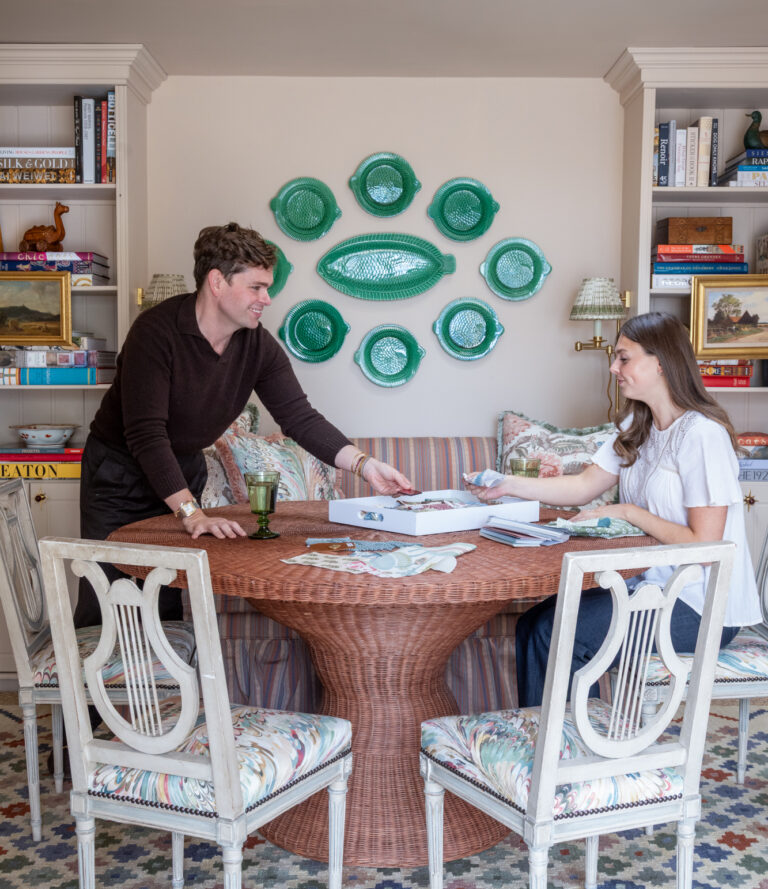
There’s a tendency for design studios to feel a little like furniture showrooms, but we wanted ours to have a more collected, lived-in feel. Mixing antiques with practical, hardworking pieces brings a sense of character and permanence to a space. Our antique drapers table is a good example: it has real presence, but it’s also something we use every day. Not everything needs to be precious or perfectly matched. Often, it’s the contrast between old and new that makes a room feel interesting.
At home: Resist the temptation to buy everything at once or in matching sets. An antique chest alongside a contemporary sofa, or a well-worn wooden table paired with upholstered dining chairs, gives a room a sense of history and individuality. The most interesting interiors tend to evolve over time, combining pieces that serve a purpose with those that simply bring you joy.
05. Don’t overlook acoustics and the little details
Large, open spaces can be wonderful for light and flexibility, but they can also be noisy. We found that introducing softer elements was important for making the studio feel comfortable. Generous curtains and larger artworks help bring warmth and texture while softening the acoustics. We’ve also thought carefully about the less attractive practicalities, including concealing wires and keeping equipment out of sight. Where possible, built-in joinery can make a real difference. We blocked off the existing roller door and introduced a joinery door instead, giving us a more considered finish without losing the functionality we needed.
At home: If an open-plan room feels echoey or a little stark, look beyond the furniture. Full-length curtains, upholstered seating, rugs and layered textiles can help absorb sound and make a large space feel more inviting. It’s also worth thinking about practical details early on, from where televisions and speakers will sit to how cables can be concealed within joinery. These small decisions often make the biggest difference to how a room feels to live in.
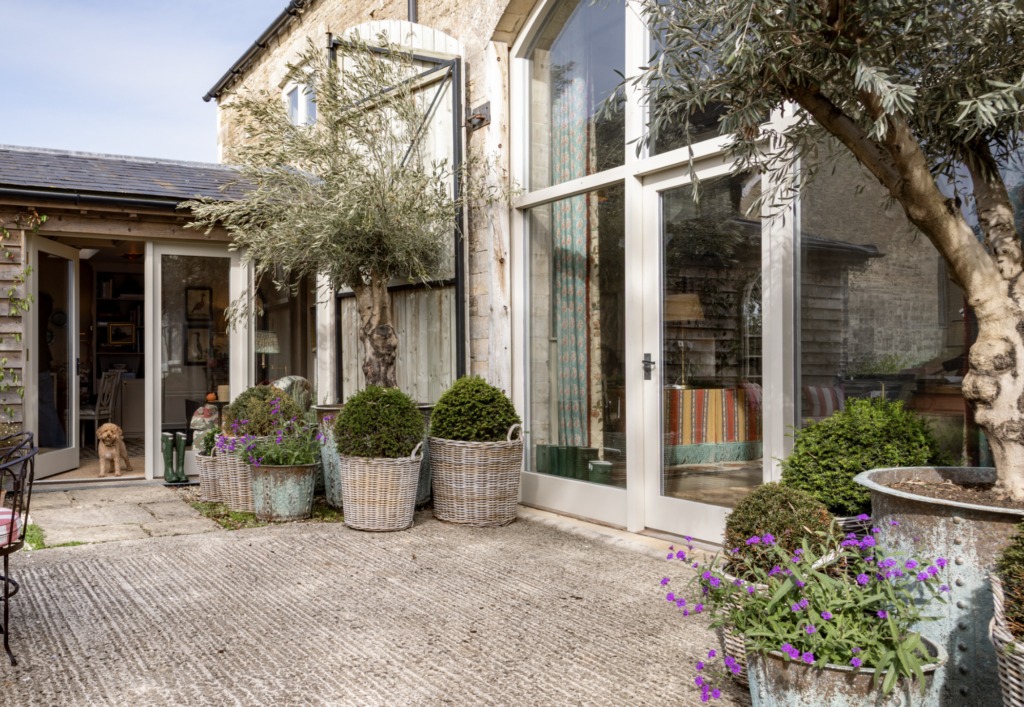
07. Prioritise natural light
If we had to pick one thing to get right, it would be natural light. Having worked in a darker office, the difference it makes to how a space feels is enormous. It also matters practically when you’re working with colour, fabrics and finishes, where seeing materials in good light is essential. Our new studio has given us that breathing room, with generous proportions and a connection to the outdoors that makes it a much more inspiring place to spend the day.
At home: Natural light can completely change the atmosphere of an open-plan space. Where possible, keep window areas clear, choose window treatments that can be drawn back fully and position mirrors to reflect light into darker corners. Natural materials, earthy colours and greenery can also strengthen the connection to the outdoors, bringing a sense of calm and warmth into the home.